

Send inquiry
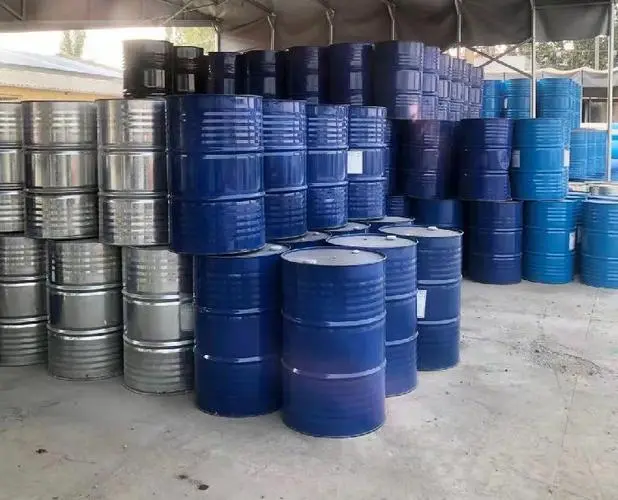
Yuanyang acquires high-quality service for polymer curing agent recovery Our company faces the whole country for a long time and recycles various overstocked chemical raw materials, chemical additives, dyes, pigments, resins, paints, inks, rubber, paraffin, flavors, curing agents, emulsifiers, polyvinyl alcohol printing paint colors. Pulp, polyether polyol, isocyanate, MDI, TDI, leather additives, plastic additives and raw materials, rubber additives and raw materials, coating additives and raw materials, electroplating additives and raw materials, daily chemical raw materials, thermoplastic elastomers, Masterbatch.
PVC thermal agent is mainly used for PVC and other chlorine-containing polymers. It is found that PVC plastic can only be processed and formed at a temperature above 160°C, and it begins to thermally decompose at 120~130°C and releases HCl gas. If HCl is not produced, the decomposition will be further aggravated. This problem has plagued PVC. The main problem of plastic and its application. Sugar cube, also known as half cube sugar, is a sugar product that is made into a half cube shape, that is, half of a cube, made from refined granulated sugar with fine grains. It has a history of many years abroad. Its consumption will increase rapidly with people's living standards. There are several small factories in the country that use the purchased fine and fine sugar to produce, but only a few sugar factories make sugar cubes.
Recovery of copolyformaldehyde, paraformaldehyde, surfactants, sodium alginate, organic bentonite, petrolatum, sodium lauryl sulfate, cellulose, vanillin, menthol, urotropine, melamine, disodium EDTA, four Sodium, whey protein, lanolin, polyvinylpyrrolidone, myristic acid, sebacic acid, trimethylolpropane, powder, fumed white carbon black, oleic acid amide, erucic acid amide, polyacrylamide, acrylamide, Caprolactam, maleic anhydride, phthalic anhydride, hydroquinone, resorcinol, catechol, trimellitic anhydride, succinic anhydride, pentaerythritol, neopentyl glycol, polyethylene glycol, photoinitiator, methyl paraben Ester propyl butyl ester, decabromodiphenyl ethane
Organobentonite is made of natural montmorillonite, mainly hectorite, as a raw material, which reacts with onium salts (such as quaternary ammonium salts). In coatings, organic bentonite is commonly used as an anti-settling agent and thickener. Its mechanism to prevent precipitation is to modify the rheological properties of the system to make it thixotropic, thereby preventing pigment settling. The participation of organically modified bentonite can be pre-gel participation and powder direct participation depending on the situation. No matter what kind of participation is used, in order to give full play to the thickening effect of organoclay, it must be fully activated, that is, to participate in polar additives, such as 5% water-containing methanol and ethanol. This polar additive can stop solvation on the surface of the sheet covered by the unsubstituted organic cations, so that the absorption between the sheets, and the polar additive penetrates into the sheets after grinding, and the absorption between the sheets. The application of organic bentonite is very common, and organic bentonite is used in chlorosulfonate anticorrosive coatings and chlorinated rubber anticorrosive coatings. The results show that the coating has good leveling properties, no sagging phenomenon, and the sedimentation time of the pigment. Organically modified bentonite as an anti-settling agent can significantly improve the performance of coatings. However, due to the deep color, poor degree, easy to produce brush marks, solvent dosage, and solid content of paint liquid, it is difficult to guarantee, so there are certain limitations in application. . There are certain limitations, otherwise there will not be so many kinds of anti-settling agents. Recycling of sodium benzoate, thiourea, hot melt adhesive, guar gum, xanthan gum, carrageenan, pectin, malic acid, bisphenol A, caustic soda, flat O, styrene-acrylic emulsion, acrylic emulsion, tannic acid, H acid, coconut oil, lauric acid soap, lauric acid, fumaric acid, salicylic acid, tartaric acid, mannitol, citric acid, xylitol, stearyl alcohol, fatty alcohol, adipic acid, stearic acid, fatty acid , Oxalic acid, boric acid, Tween Span, leveling agent, defoaming agent, dispersing wetting agent, etc. Door-to-door cash transaction, unlimited quantity, intermediary paid, welcome friends from all walks of life to call
2 Used for baked food, it can toughen the dough, increase the volume of the product, make the pores fine and uniform, and prevent aging. The dosage is 0.2% to 0.5% of the flour. Since most elastomers are incompatible with waste PP, the interface bonding is poor, and there is phase separation in processing and use, which affects its performance. In order to improve the interface compatibility of waste PP alloys and enhance the interfacial bonding, many scholars have carried out extensive research and found two kinds of materials that can enhance the interfacial bonding of the blended materials, and the storage modulus, loss modulus and system viscosity of the blended materials increase. Capacity agent. [14]
The company recycles thousands of chemical products. Our company promises to recycle them quickly, at a reasonable price, and with professional, safe and environmentally friendly methods. Welcome your calls and sincerely look forward to cooperating with you!